
The Vivint vs Ring comparison is one of the most searched in the home security space — and for good reason. Both are top-rated systems. Both offer cameras, sensors, and app control. But Vivint vs Ring represents a fundamental difference in what home security should look like.
Here is a complete Vivint vs Ring breakdown for 2026 — including technology, monitoring, pricing, and the key reason professional installation changes everything.
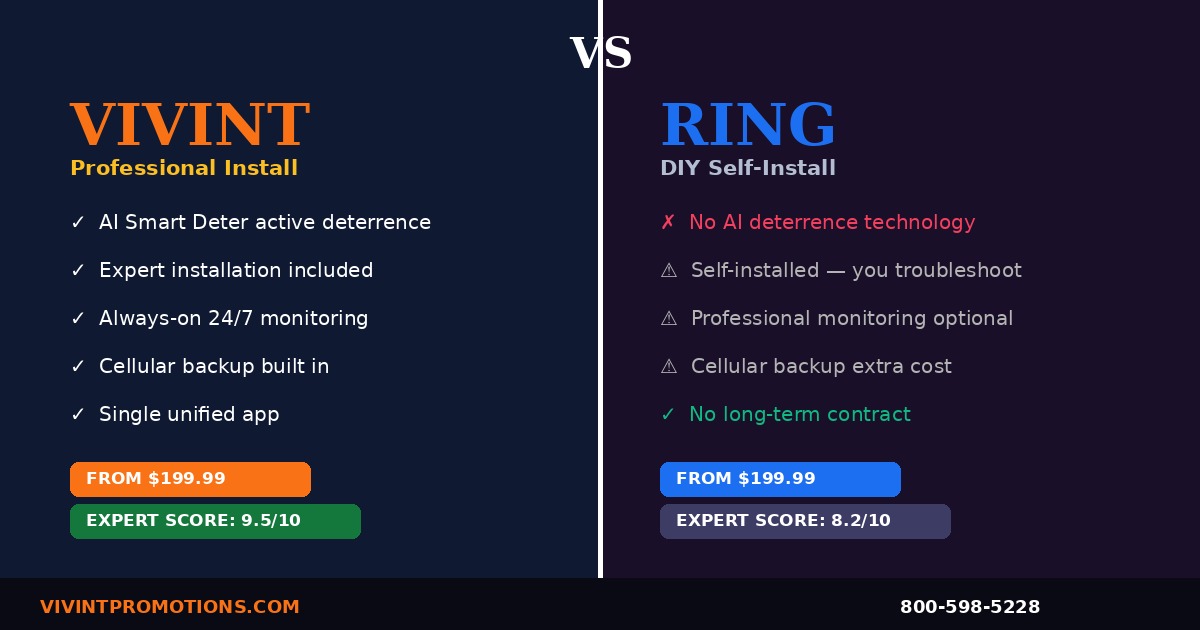
Vivint vs Ring: The Core Difference
Ring was founded in 2013 as a doorbell camera company, was acquired by Amazon, and evolved into a budget-friendly DIY security ecosystem. It’s built for people who want to handle setup themselves and keep monthly costs low.
Vivint has been professionally installing home security systems since 1999. Its entire model is built on expert installation, AI-powered deterrence, and a unified smart home experience. In the debate, these aren’t just style differences — they produce meaningfully different outcomes for your home’s actual safety.
For a detailed independent analysis, see SafeHome.org’s Vivint vs Ring comparison.
Vivint vs Ring: Technology and AI Deterrence
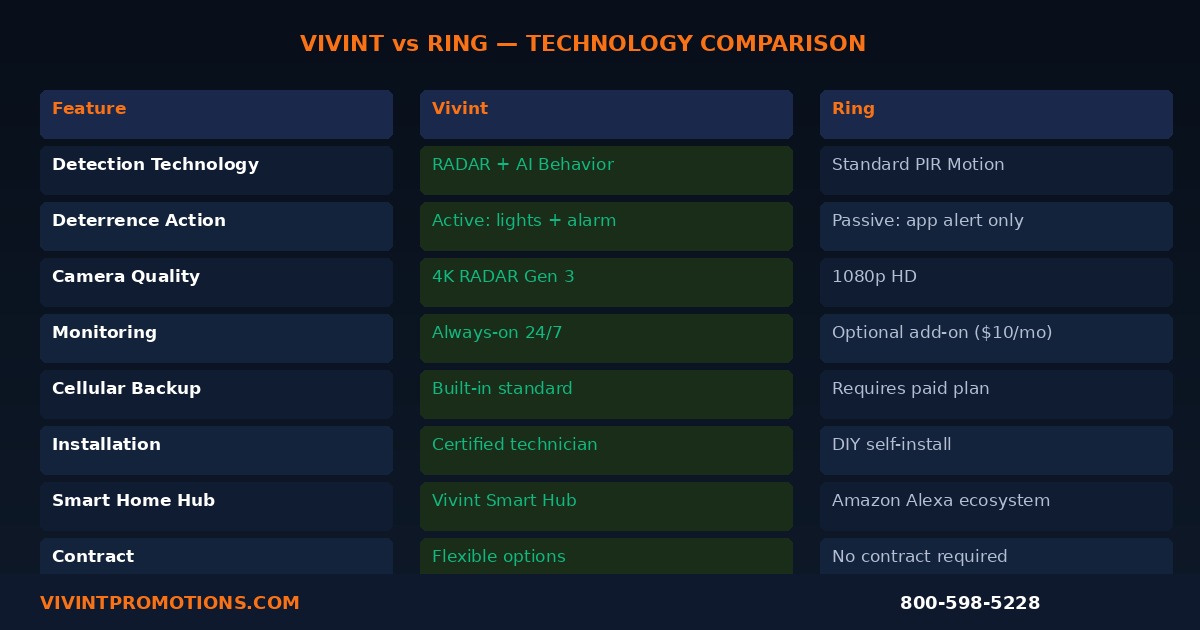
This is the clearest gap in the Vivint vs Ring comparison. Ring cameras are excellent for recording and alerting. Vivint’s Smart Deter technology actively prevents crime — using RADAR-based AI detection to identify suspicious behavior and trigger flashing lights and audible alarms before an intruder reaches your door.
Ring has no comparable deterrence feature. The most it offers is a notification to your phone after motion is detected. In the technology match, Vivint isn’t just ahead — it’s operating in a different category entirely.
Vivint vs Ring: Installation Quality
In the installation comparison, the difference is significant. With Ring, you are responsible for device placement, drilling, mounting, app configuration, and troubleshooting. For many people that’s manageable — but it also means cameras potentially aimed incorrectly, sensors placed where they trigger too easily, and security gaps that were never identified.
With Vivint, a certified technician conducts a full security assessment of your property, recommends the right equipment, and installs everything — including sensors hidden inside door frames — before confirming the system is fully operational. You never touch a screwdriver.
Vivint vs Ring: Monitoring
- Ring: Professional monitoring is optional, costs an extra $10/month, and is not active unless purchased as a separate add-on.
- Vivint: Professional monitoring is always active, always included, and dispatches emergency services if you cannot be reached.
- Ring: Wi-Fi dependent — if your internet goes out, cellular backup requires a paid Ring Protect Plus plan.
- Vivint: Cellular backup is built in standard. Your home stays protected even if Wi-Fi goes down or is deliberately cut.
More detail on monitoring differences: SafeWise Vivint vs Ring comparison.
Vivint vs Ring: Pricing
Ring wins on upfront cost — a basic Ring Alarm kit starts around $200 with no contract. Vivint starts at $199.99 for equipment but scales quickly and requires a monitoring contract. However, when you calculate the 3-year total cost of ownership — including equipment, monitoring, and the real-world value of AI deterrence versus basic recording — many homeowners find the Vivint vs Ring price gap is smaller than expected.
👉 Compare Vivint packages and pricing at VivintPromotions.com
Vivint vs Ring: Our Verdict
In the Vivint vs Ring comparison, Ring is the right choice for renters, budget buyers, and people who want a simple DIY camera setup with no contracts. Vivint is the right choice for homeowners who want professional-grade protection, expert installation, AI-powered deterrence, and guaranteed 24/7 monitoring.
For families who own their home and want the most capable system available, the comparison isn’t particularly close. Vivint delivers a fundamentally different — and more complete — level of protection.
👉 Get a free Vivint quote at VivintPromotions.com
📞 Call 800-598-5228 or visit VivintPromotions.com — free quote, no pressure.